
Takeda’s Support for the Rare Disease Community

Partnering With The Rare Disease Community For Change
"When you hear hoofbeats, don’t expect to see a zebra."
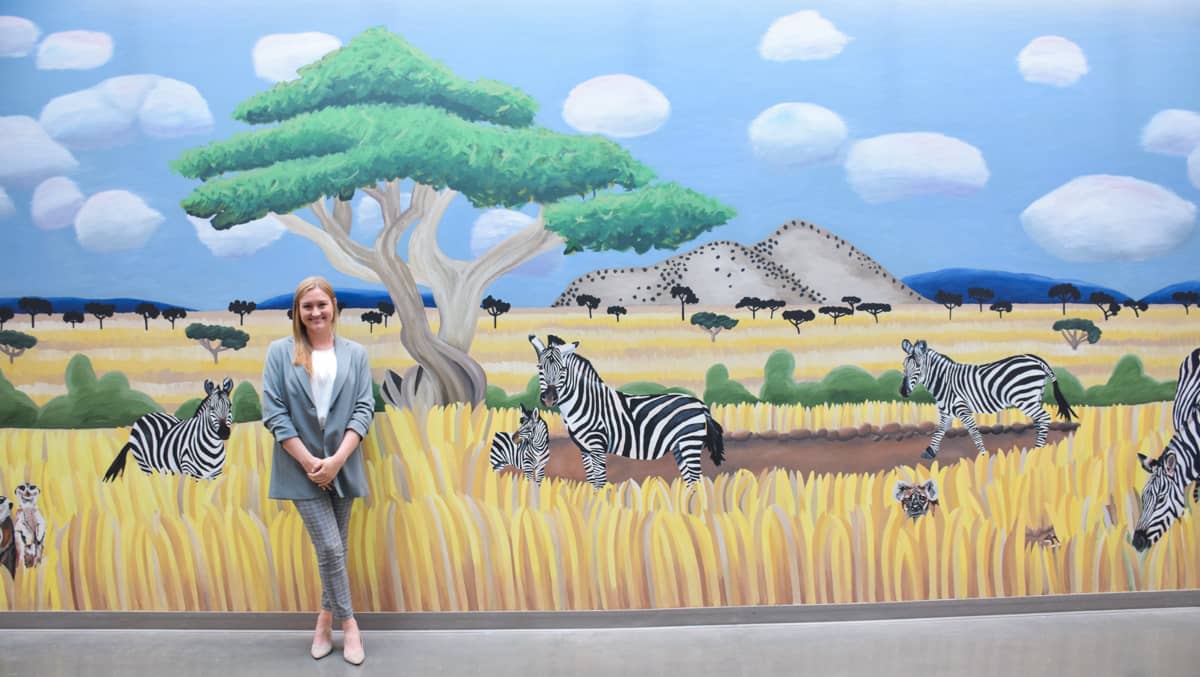
Every Rare Disease Day and throughout the year, the rare disease community unites around a powerful symbol: the zebra. With its distinctive stripes, the zebra represents the uniqueness of each person living with a rare disease—no two journeys, diagnoses or experiences are the same.1

The zebra comes from a famous medical saying: “When you hear hoofbeats, don’t expect to see a zebra.”2 This guidance often leads clinicians to associate patient symptoms with common conditions before considering the possibility of a rare disease. In fact, it takes an average of five plus years from symptom onset to receive an accurate rare disease diagnosis, which can take a profound toll on patients, their families and caregivers.3,4
Fast Facts
- A disease is labeled “rare” if it affects fewer than 65 per 100,000 people globally.5
- With over 7,000 rare diseases identified, rare diseases affect over 3% of the world’s population.6,7
- About 70% of rare diseases appear in childhood.8
- Diagnosis challenges may be more pronounced in low- and middle-resource countries and in indigenous populations.9
- Despite clinical and drug development advancements for rare diseases, less than 5% of known rare diseases have approved treatments available.6
Behind every one of these numbers is a person—and often a long, uncertain search for answers. For the millions of people living with a rare disease, the path to a diagnosis can shape everything: health, school, work, family life and the feeling of being believed.
That’s why Takeda is focused on creating meaningful change alongside the rare disease community—listening first, learning from lived experience and working to reduce inequities so more people can reach the right diagnosis and the right care sooner. We put patients at the center of everything we do and work tirelessly to support patients on their journey because rare disease patients, their families and caregivers deserve answers and a clear pathway to diagnosis.
A key part of our strategy is rooted in partnering with the rare disease community—including patients, caregivers, clinicians and advocacy groups—to help accelerate the time to diagnosis, improve the standard of care and break down barriers to increase equitable access for all. Advocacy organizations in particular play a critical role in the rare disease journey. They can bring essential insights and comfort, helping ensure that the community feels informed and knows that their voices are heard.
We applaud their efforts and know that, by working together, we can achieve meaningful progress in rare disease care—because patients deserve answers and a path forward to a brighter future.
Explore how community advocates are raising awareness for rare diseases and follow them on social to show your support:
Advocacy Organizations
Global | United States | Japan | Europe |
Global
United States
Japan
Europe
References
- Show Your Stripes for Rare Disease Day with NORD. National Organization for Rare Disorders. [Accessed January 31, 2026]. https://rarediseases.org/rare-disease-day/
- Evans WR, Rafi I. Rare diseases in general practice: recognising the zebras among the horses. Br J Gen Pract. 2016; 66(652):550-551. https://pmc.ncbi.nlm.nih.gov/articles/PMC5072891/
- Marwaha S, Knowles JW, et al. A guide for the diagnosis of rare and undiagnosed disease: beyond the exome. Genome Med. 2022;14(1):23. https://genomemedicine.biomedcentral.com/articles/10.1186/s13073-022-01026-w
- What is a rare disease? EURORDIS Rare Diseases Europe. [Accessed January 31, 2026]. https://www.eurordis.org/information-support/what-is-a-rare-disease/
- Abozaid, G. M., Kerr, K., McKnight, A., & Al-Omar, H. A. Criteria to define rare diseases and orphan drugs: a systematic review protocol. BMJ Open. 2022; 12 (7). https://bmjopen.bmj.com/content/12/7/e062126
- The Lancet Global Health, The landscape for rare diseases in 2024. [Accessed January 31, 2026]. https://www.thelancet.com/journals/langlo/article/PIIS2214-109X(24)00056-1/fulltext
- Bruckner-Tuderman, L. Epidemiology of rare diseases is important. Journal of the European Academy of Dermatology and Venereology. 2021; 35 (4). https://onlinelibrary.wiley.com/doi/10.1111/jdv.17165
- Global Commission Report 2024. The Global Commission To End The Diagnostic Odyssey For Children With A Rare Disease [Accessed January 31, 2026]. https://globalrarediseasecommission.com/wp-content/uploads/2024/05/Global-Commission_2024-Report.pdf
- Wang, C.M., Whiting, A.H., Rath, A. et al. Operational description of rare diseases: a reference to improve the recognition and visibility of rare diseases. Orphanet J Rare Dis. 2024; 19 (334). https://ojrd.biomedcentral.com/articles/10.1186/s13023-024-03322-7


Share this story