
Takeda's Next Chapter: CEO Insights on Innovation & Growth
Bridging to the Future: Our Leaders Shaping a Bold New Chapter
Throughout Takeda’s 244-year history, our dedication to patients, our purpose and our values have stood the test of time. Each visionary leader has carried the company through tremendous change - growing our organization while preserving two constants: our values and our focus on advancing science for patients in need.
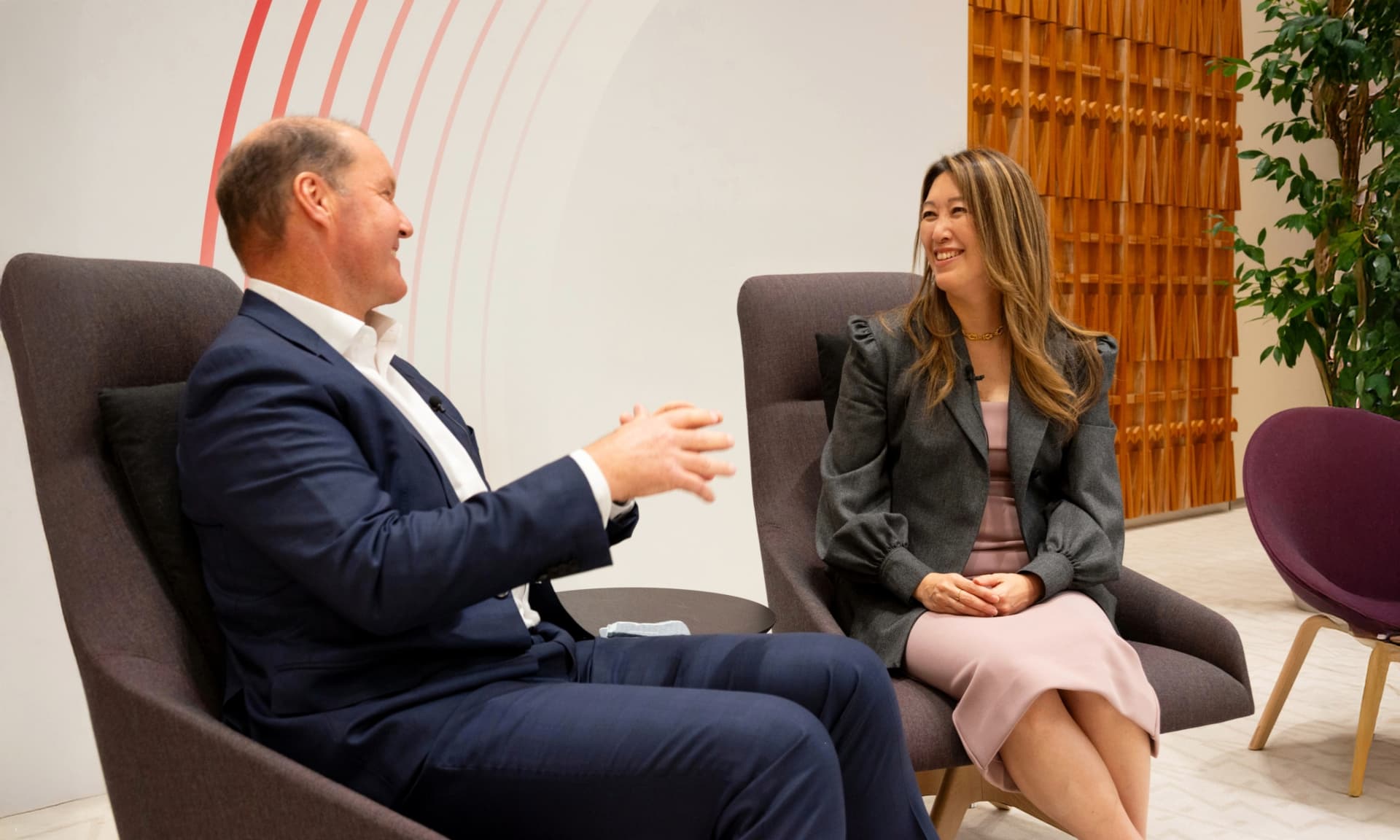
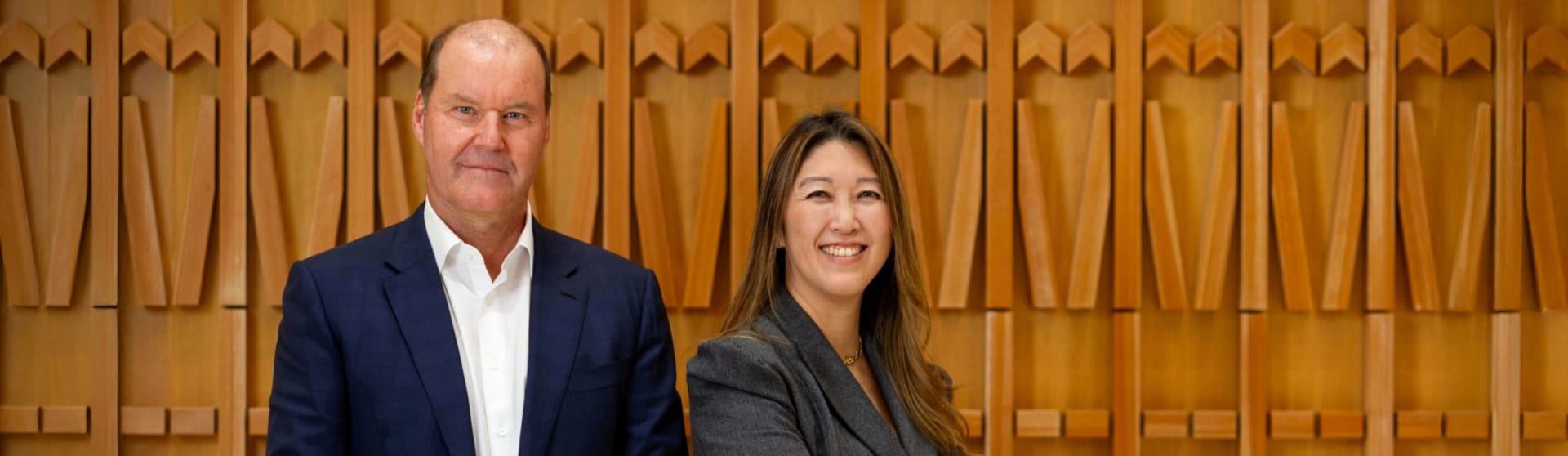
Today, Takeda stands at a unique inflection point. Current President & Chief Executive Officer Christophe Weber’s forward-thinking approach reignited our approach to innovative research and development and established Takeda as a truly global company. As our late-stage pipeline, built on years of careful planning and bold choices, nears launch, Julie Kim, nominated by Takeda’s Board of Directors as the company’s next CEO, prepares to guide Takeda’s exciting new chapter.
In a candid discussion, our current CEO and his successor reflect on where the company stands today and the momentum ahead. Here’s a sample of that discussion.
Julie Kim:
Christophe, R&D sits at the very heart of what we do at Takeda. You’ve often reminded us that when we follow the science—grounded in a deep commitment to patients with unmet needs—we unlock real possibility. The evolution of our pipeline over the years shows just how powerful that strategy is. It’s why I’m confident in what we’ve built and, more importantly, in the impact we can have. As you reflect on your 12 years at Takeda, can you walk us through some of the decision points that it took to get here?
Christophe Weber:
It wasn’t easy to get to this point. A decade ago, we lacked focus on discovering and developing first-in-class or best-in-class medicines. So, with Andy Plump joining as head of R&D, we pivoted away from our old business model, divesting many assets over time and narrowing our focus on fewer therapeutic areas while broadening our core therapeutic modalities. From there, we’ve consistently focused our pipeline so the highest-potential assets serving the greatest unmet need can advance. It’s an intricate balance.
Today, we prioritize through the lens of unmet medical need, scientific validity, an accelerated development path and commercial opportunity, bringing us to our current pipeline.
We have a lot of momentum across each of our late-stage pipeline programs. These programs have the potential to deliver significant value and address unmet medical needs as we work to redefine the standard of care in neuroscience, oncology and GI and inflammation. We’ve nearly doubled our level of R&D investment in the last 10 years, and we’re confident of a return on that investment for our shareholders.
Julie:
This journey reflects more than a commitment to scientific excellence - it's about how we deliver lasting value for patients and our business. Ensuring we can reach as many patients as possible also requires the scale, resources and expertise to launch globally in diverse markets. We must understand the different challenges patients, doctors and their communities face across different geographies. And of course, we need to understand the distinct intricacies of regulatory environments and health systems.
We’re entering an exciting phase for the company as our late-stage pipeline nears commercialization. With a presence in about 80 countries and regions, we’re better equipped than ever to bring new medicines to patients who need them most. A decade ago, competing on this scale was an ambition. Today, it’s our reality.
Christophe:
Yes, and look at the U.S. for example. When I first joined the company, we had about 2,000 employees in the U.S. with less than 20% of our revenue, and today it’s home for about 20,000 employees, about 50% of our revenues globally and many of our strategic operations. From an industry perspective, the U.S. has developed one of the most competitive and conducive ecosystems for life sciences in the world, although we are seeing this being challenged. With your extensive U.S. and global pharma experience, you’re well positioned to navigate Takeda through this period for the company and industry.
Julie:
It is definitely a dynamic time for the industry, but also a time that brings so much possibility. For example, look at how quickly the latest forms of AI are changing our industry. Our ability to discover, develop and launch new medicines globally is also obviously strengthened by our accelerated digital transformation, using AI and many other advanced technologies. It’s part of preparing for the future while fueling growth and impact, and Christophe, you’ve set us up very well to be able to do this.
At the same time, we know our shareholders are asking: what are the tangible benefits of these technologies both today and in the long term? It’s a question I welcome, because our investments should always aim to deliver real-world value, whether that's for patients, healthcare providers or the company. How have you thought of these investments in data, technology and AI?
Christophe:
Well, we can demonstrate that return on investment in a number of ways, including cost efficiencies, speed and better outcomes – across every part of our business. Bottom line is that to compete in today’s world, embracing AI and advanced technology is an absolute must. Years ago, we set out on a multi-phased transformation to build a strong technology and data foundation.
The driving force behind this is our people. We want everyone at Takeda to embrace advanced technologies and adapt. That includes leading foundational changes in how we run our business and developing new skills in automation and productivity that will help them succeed now and in the future. Looking ahead, Julie, the already rapid pace of new opportunities in this space will only continue to accelerate during your tenure.
Julie:
Agree - we’ve known for a long time that AI and technology will fundamentally change what we do and as you said, accelerate drug development from bench to bedside. As we think about our future, we will need to make bold advancements across our business, including strategic investments in data, AI and technology, as well as upskilling our people.
Christophe:
Julie, on that note, what are you most looking forward to as we look ahead at Takeda’s future?
Julie:
I’ll start by saying it’s a true privilege to have the trust of our Board, colleagues and partners as we look to our next chapter. I’m also grateful for the structured and phased transition process, which provides continuity while also setting us up to prepare for the future.
There’s so much excitement as we prepare for upcoming launches from our innovative pipeline. When you couple that with the promise of AI and advanced technologies, and the dedication of our people rooted in values, we have all of the necessary components to win for our patients. The opportunity ahead of us is to capitalize on what we’ve built to fuel our growth and operate with greater speed while maintaining quality and safety so that we can continue to bring these breakthrough products to our patients. Our future is bright, and I’m excited to help shape it!
This disclosure and any materials distributed in connection with this disclosure may contain forward-looking statements, beliefs or opinions regarding Takeda’s future business, future position and results of operations, including estimates, forecasts, targets and plans for Takeda. Without limitation, forward-looking statements often include words such as “targets”, “plans”, “believes”, “hopes”, “continues”, “expects”, “aims”, “intends”, “ensures”, “will”, “may”, “should”, “would”, “could”, “anticipates”, “estimates”, “projects”, “forecasts”, “outlook” or similar expressions or the negative thereof. These forward-looking statements are based on assumptions about many important factors, including the following, which could cause actual results to differ materially from those expressed or implied by the forward-looking statements: the economic circumstances surrounding Takeda’s global business, including general economic conditions in Japan and the United States and with respect to international trade relations; competitive pressures and developments; changes to applicable laws and regulations, including tax, tariff and other trade-related rules; challenges inherent in new product development, including uncertainty of clinical success and decisions of regulatory authorities and the timing thereof; uncertainty of commercial success for new and existing products; manufacturing difficulties or delays; fluctuations in interest and currency exchange rates; claims or concerns regarding the safety or efficacy of marketed products or product candidates; the impact of health crises, like the novel coronavirus pandemic; the success of our environmental sustainability efforts, in enabling us to reduce our greenhouse gas emissions or meet our other environmental goals; the extent to which our efforts to increase efficiency, productivity or cost-savings, such as the integration of digital technologies, including artificial intelligence, in our business or other initiatives to restructure our operations will lead to the expected benefits; and other factors identified in Takeda’s most recent Annual Report on Form 20-F and Takeda’s other reports filed with the U.S. Securities and Exchange Commission, available on Takeda’s website at: https://www.takeda.com/investors/sec-filings-and-security-reports/ or at www.sec.gov. Takeda does not undertake to update any of the forward-looking statements contained in this disclosure or any other forward-looking statements it may make, except as required by law or stock exchange rule. Past performance is not an indicator of future results and the results or statements of Takeda in this disclosure may not be indicative of, and are not an estimate, forecast, guarantee or projection of Takeda’s future results.
Share this story