
Finding the Words: One Family’s EoE Diagnosis

Finding the Words: How an EoE Diagnosis Changed One Family’s Outlook
This story features a real patient and her mother sharing their personal experiences and is available to the public for disease awareness only. Individual experiences may vary. Information should not be used for diagnosing or treating a health condition or disease, and it is not intended as a substitute for consultation with a health care professional. Madeline and Sally are paid consultants for Takeda.
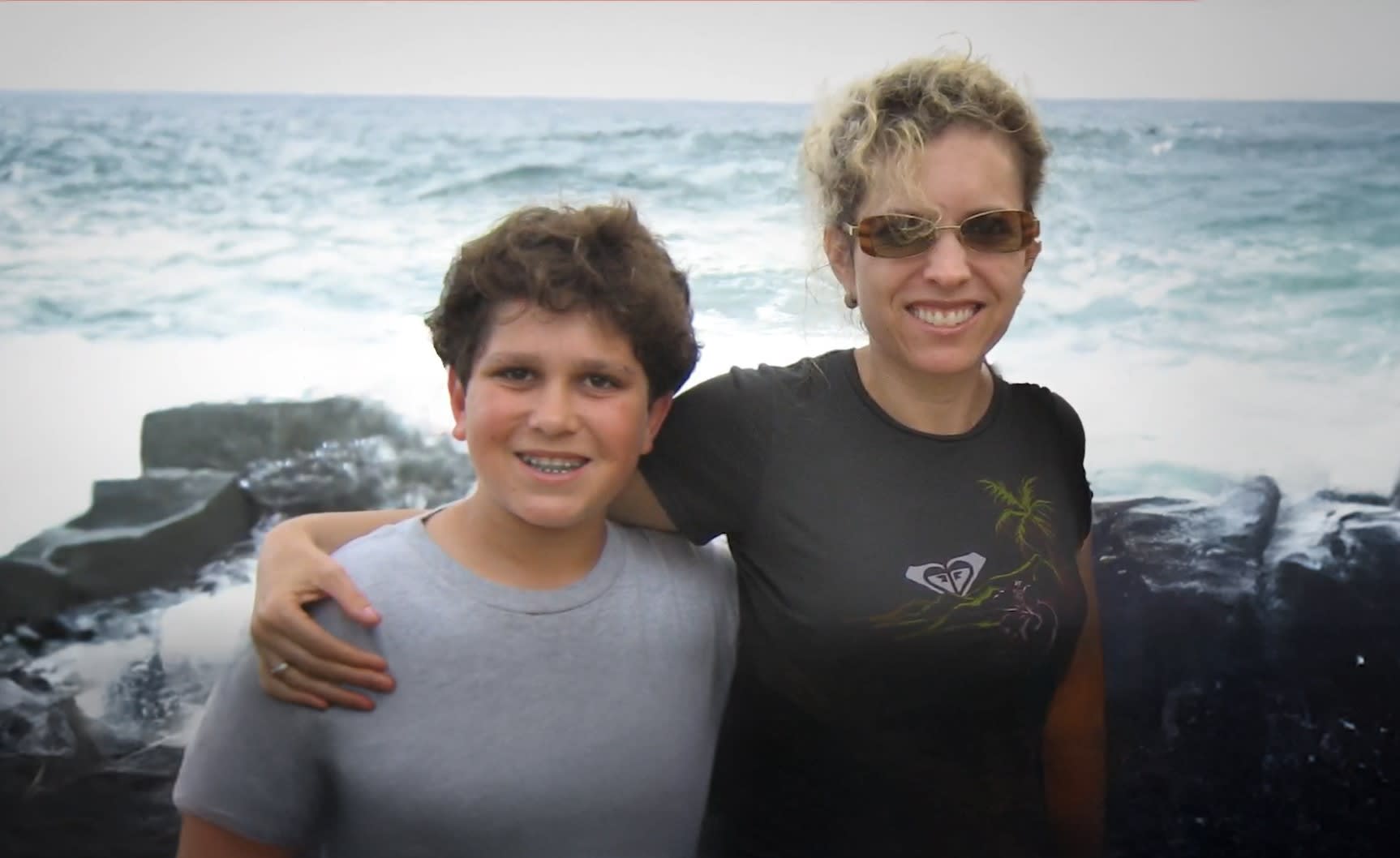
Madeline was about nine years old when she first told her mom, Sally, about “the bubble,” a persistent pain in her chest.1,2 At the time, she didn’t have any other words to describe the feeling. Her throat often felt tight, and sometimes food would get stuck, causing her to choke or vomit.1,2
Despite her nursing experience, Sally was confused and concerned by the episodes. “I knew we were missing something, I just didn’t know what.” They visited Madeline’s pediatrician, the first of many doctor appointments to come.
A cardiologist confirmed Madeline’s heart was normal. Another specialist ruled out asthma.1,2,3 Her bloodwork kept coming back normal. Each possible explanation led to another dead end. Eventually, they began a months-long wait to see the only pediatric gastroenterologist in their hometown.
For Sally, this was the most emotionally difficult part of Madeline’s story. “I was frustrated that I didn’t have words to reassure her and couldn’t protect her,” she recalls.
After a year and a half of appointments and testing, Madeline finally received a diagnosis: eosinophilic esophagitis (EoE), a progressive, immune-mediated inflammatory disease of the esophagus.1
“I finally had a name for what I was experiencing,” says Madeline, now an adult. “And that was worth its weight in gold.” With a diagnosis, she felt validated and ready to begin the journey of healing.
Learning to live with EoE
With support from their care team, Sally helped Madeline navigate a restrictive food elimination diet, and together they tracked potential triggers by journaling and cataloguing approaches they tried.2,4,5 “Our lives were different, especially mealtimes,” Sally recalls.
“Food revolves around every part of our lives,” says Madeline. “Once I found out my trigger, I think it broke something inside me.” Her struggles and self-doubt only deepened in high school. She wanted to join her friends in trying new things, but found that her adaptive behaviors only exacerbated the underlying issue.1,4
“What we’ve learned is that inflammation in the esophagus over a long period of time is not good,” Sally explains.1,4 When it is not controlled, inflammation of EoE can worsen and potentially cause irreversible scarring and narrowing of the esophagus over time.
Sally emphasizes how using shared, accurate language to describe Madeline’s disease changed the trajectory of their journey. The more Madeline learned about EoE, the more confident she felt speaking up in health care settings, at school and social outings with her friends.
Madeline acknowledges that managing her disease has been—and continues to be—a process.1 That’s one reason she wants to help others recognize some of the symptoms that can be associated with EoE and the importance of working with one’s health care team.

The mother and daughter duo hope that by sharing their experiences with EoE, others will feel less alone and be able to find answers sooner.
Why awareness matters
Madeline is now building a life with her fiancé, who, like her mom, is an important source of support. She wants others to know they’re not alone. “How many people are actually living with EoE and just swallowing it?” says Madeline. “Or not swallowing it,” she adds, a play on words that reflects dysphagia, one of the most common symptoms of EoE.1
Despite its rising prevalence, EoE can be difficult to diagnose due to varying symptoms and adaptive behaviors that often mask signs of the condition.1,4,6,7 Additionally, a 2018 survey of adult and pediatric gastroenterologists showed only 12% of them used all three EoE diagnostic criteria from the American College of Gastroenterology and European EoE guidelines, highlighting a need for increased standardization in practice.8
“It’s empowering for patients to have a clear, accurate diagnosis—medically, but also socially and emotionally,” says Vijay Yajnik, M.D., Ph.D., Global Medical GI and Inflammation (GI2) Therapeutic Area Head at Takeda. “The faster we recognize signs and symptoms, the sooner people living with EoE can receive an accurate, timely diagnosis and explore appropriate disease management options to help find relief.”
For Madeline, her experience with EoE ebbs and flows. What matters most now is that she finally has an answer. “I’ve spent so much of my life waiting. Waiting for the diagnosis. Waiting for a test. Waiting to eat,” she says. “I want others living with this disease to have more information earlier in their journey, so they can find their own path to healing as quickly as possible.”
EoE at a glance
EoE is a progressive inflammatory disease that occurs in the esophagus.1 Due to a buildup of eosinophils and other inflammatory cells, EoE can cause a range of symptoms, which can vary by person and age.1,5 These include difficulty swallowing, vomiting and chest pain, among others.1
Once considered a rare condition, EoE is now increasingly encountered in clinical practice.6 Recent research suggests EoE may affect as many as 1 in 700 people in the U.S., marking a 5-fold increase since 2009.9
- Muir AB, Brown-Whitehorn T, Gowin B, et al. Clin Exp Gastroenterol. 2019;12:391-399.
- Carr S, Chan ES, Watson W. Allergy Asthma Clin Immunol. 2018;14(Suppl 2):58.
- Lucendo AJ, Molina-Infante J, Arias Á, et al. United European Gastroenterol J. 2017;5(3):335-358.
- Hirano I, Furuta GT. Gastroenterology. 2020;158(4):840-851.
- Furuta GT, Katzka DA. N Engl J Med. 2015;373(17):1640-1648.
- Dellon ES, Muir AB, Katzka DA, et al. Am J Gastroenterol. 2025;120(1):31-59.
- Lam AY, Lee JK, Coward S, et al. Clin Gastroenterol Hepatol. 2023;21(12):3041-3050.e3.
- Eluri S, Iglesia EGA, Massaro M, et al. Dis Esophagus. 2020;33(7):doaa025.
- Thel HL, Anderson C, Xue AZ, Jensen ET, Dellon ES. Clin Gastroenterol Hepatol. 2025;23(2):272-280.e8.

US-NON-12232v1.0 01/26
Share this story