
Facing the Unknown: Lucas’ Journey with iTTP | Takeda Stories

Facing the Unknown: Lucas’ Journey with iTTP
“The symptoms are like a silent assassin”
This article features real patients sharing their personal experiences and is available to the public for disease awareness only. Individual experiences may vary. Please consult your healthcare provider for medical advice. This article is developed by Takeda. Speakers have received compensation from Takeda for their participation.
At 40 years old, Lucas was living a full life. He was working, socializing and spending time with loved ones. He felt more tired than usual, but nothing seemed out of the ordinary until subtle changes began to appear: a persistent rash on his legs and increasing fatigue. Still, nothing raised alarm until one morning in 2010, during a visit with his mother – when everything changed.
“I was sitting on the couch,” Lucas recalls. “I didn’t recognize my own mother. I didn't know what was happening. I was already sort of comatose.”
Lucas was rushed to the hospital in the Netherlands. There, he was admitted to intensive care and fell into a coma that lasted nearly a week.
When Lucas woke up, he learned he had immune-mediated thrombotic thrombocytopenic purpura (iTTP), a rare, life-threatening blood disorder caused by a severe deficiency in the ADAMTS13 enzyme. iTTP can lead to the formation of small clots in blood vessels throughout the body, which may trigger acute events such as stroke, heart attack or pulmonary embolism. Even after recovery, many patients face long-term challenges, including organ damage, fatigue, impaired memory and the constant worry of another episode (or relapse).1,2
For Lucas, the impact was immediate and profound. He couldn’t speak properly and struggled with basic cognitive tasks, including simple math. But this was only the beginning: a year later, while vacationing in Tunisia, he had a second life-threatening episode.
“I ended up on the side of the pool paralyzed,” Lucas says. “I couldn’t speak. The only thing I could do was blink.”
He spent two weeks in a Tunisian hospital, followed by another month recovering back in the Netherlands.
Living with the reality of relapse
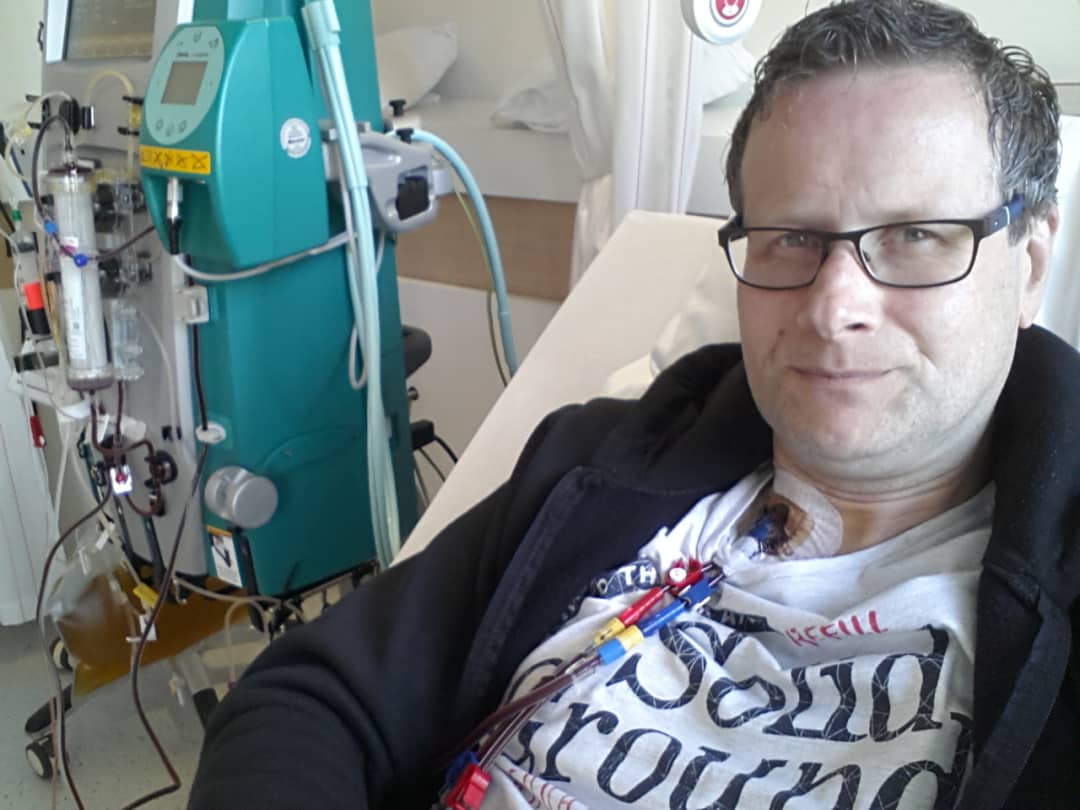
“Don't ever forget it can come back. You can have a relapse.”
Lucas wasn’t told that iTTP could reoccur, so he was caught completely off guard when it happened again. He has since learned that up to half of all iTTP patients will relapse, with most relapses occurring within the first two years following the initial episode. Patients with a history of relapse also have a higher risk of subsequent relapses, which are associated with an increased risk of morbidity and mortality if left untreated.1,3
Low ADAMTS13 enzyme activity (<20%) is a reliable indicator of potential relapse. As such, iTTP patients like Lucas require long-term monitoring of ADAMTS13 enzyme levels to allow for early recognition – and prevention – of relapses.3
From patient to advocate
Due to the rarity of the condition, general awareness of iTTP remains low. The disease affects patients in different ways, with a wide range of symptoms and experiences, and there is no cure or one-time treatment.1,4 This makes it difficult to recognize, explain and manage. The potential for relapse adds further complexity and uncertainty.

“The first few days, certainly the first couple of weeks, are so chaotic,” he says. “They’re full of new experiences and emotions that patients probably haven’t felt before. I think it's important for them to speak to people who understand what they’re going through and who can help them manage and cope with the specific problems that come with living with iTTP.”
Lucas’ life now with iTTP
These days, Lucas still undergoes treatment every 15-16 months to maintain his ADAMTS13 enzyme levels and manage his condition. He also receives regular monitoring, which helps him feel more comfortable and reduces the fear of a relapse, and has accepted his new normal.
“My life has changed dramatically,” Lucas says. “I only have a few hours in the day where I can be physically active, and after that, it's done. I don’t do a lot of socializing because after about an hour or two, I’m spent. And I'm a bit of a social creature by nature, so not having that is really difficult at times.”
Despite his challenges, Lucas remains hopeful and focused on the future. He is encouraged by the growing awareness around iTTP and the scientific progress being made to support patients.
“The work that is being done to develop new treatments and approaches is really helping the iTTP community,” he says. “It is also creating awareness worldwide. If we help even 10 people, it’s worth doing.”
References
- Nunez Zuno JA and Khaddour K. Thrombotic Thrombocytopenic Purpura Evaluation and Management. https://www.ncbi.nlm.nih.gov/books/NBK470585/. Last accessed September 2025.
- Chiasakul T and Cuker A. Clinical and laboratory diagnosis of TTP: an integrated approach. Hematology Am Soc Hematol Educ Program. 2018;2018(1):530-538. doi:10.1182/asheducation-2018.1.530. Last accessed: September 2025.
- Doyle, A, et al. Long-term risk of relapse in immune-mediated thrombotic thrombocytopenic purpura and the role of anti-CD20 therapy. Blood (2023) 141 (3): 285–294. https://doi.org/10.1182/blood.2022017023. Last accessed: September 2025.
- Sukumar S, Lämmle B, Cataland SR. Thrombotic Thrombocytopenic Purpura: Pathophysiology, Diagnosis, and Management. J Clin Med. 2021;10(3):536. Published 2021 Feb 2. doi:10.3390/jcm10030536. Last accessed: September 2025.
Related Stories
A new mother faces the challenge of the rare disease cTTP

Share this story