
Driving innovation in plasma-derived therapies | Takeda Stories

Driving innovation in plasma-derived therapies
We are investing in plasma-derived therapies (PDTs) and applying the latest technology to expand access in more countries and improve the patient experience.
From vein to vein
With more than 80 years of leadership in PDTs, Takeda is equipped with an end-to-end, integrated plasma value chain and a portfolio of more than 20 differentiated PDT medicines and integrated care solutions, reaching patients in more than 80 countries. The importance of these therapies is unmistakable; they treat people with rare, complex and chronic conditions, many of which are lifelong and have few or no other treatment options.
The process of producing PDTs is long, complex and capital-intensive: It can take up to 12 months from plasma donation until medicines reach patients. Our process begins with plasma collection from healthy donors through our global network, including our more than 270 BioLife donation centers across the U.S. and Europe. The plasma is then processed at one of our eight PDT manufacturing facilities, where our team transforms it into life-saving and life-sustaining treatments for patients.
Our PDT R&D team works across the value chain, from enhancing donation and manufacturing processes to pursuing new indications and patient-centric innovations that can improve the treatment experience.
We are also working to expand access to our existing therapies for patient populations with significant unmet need. In the U.S., this includes exploring immunoglobulins (IG), a protein found in human plasma, for certain people living with secondary immunodeficiency (SID).1 SID disproportionally impacts patients with certain cancers, either due to cancer or as a side-effect of treatments. IG treatment for SID is approved in Europe, and as diagnosis rates improve and oncology treatments advance, demand for SID therapies is expected to grow.
1 IG is not currently an approved treatment option for SID in the U.S.Making every drop count
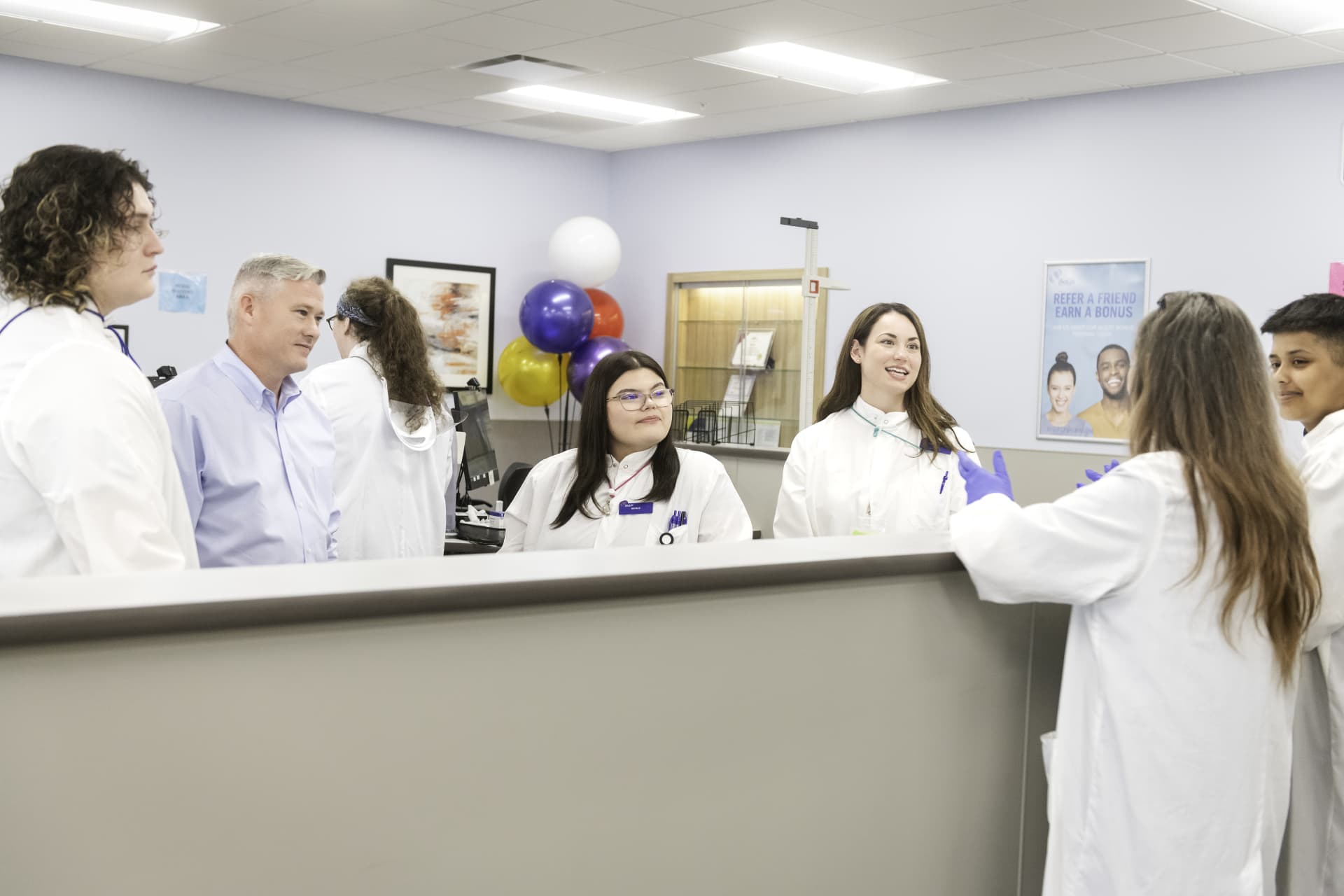
Plasma cannot be manufactured— it can only be obtained through donations from healthy adults. That is why we consider those who donate plasma at BioLife centers to be real-life heroes.
In FY2025, we rolled out new personalized nomogram technology in our U.S. BioLife donation centers that tailors plasma donation to each donor's unique body attributes and provides the potential to safely increase the average amount of plasma collected.
In addition, our AI-powered Smart Donor Care program improves the donor experience by leveraging web chat-based automation and voice-assistant technology with human support to address donor needs in real-time.
“When I explain what we do at BioLife, I tell people we’re changing lives each and every day. Every action we take here is about ensuring that the commitment of our donors translates into life-changing medicine, safely and efficiently.”
Reducing our environmental footprint across the PDT value chain
In FY2025, we celebrated the launch of AHEAD (Advanced Heat Pump Demonstrator) at our Vienna PDT manufacturing site. Developed through a multi-year collaboration with the AIT Austrian Institute of Technology, AHEAD generates process steam without the use of fossil fuels. This enables the site to generate CO₂-free steam for more than seven months each year, reducing emissions by up to 1,600 tons annually, a reduction of approximately 80% for our largest site in Vienna.
Since FY2021, we have committed to building all new BioLife plasma donation centers in the U.S. as all-electric facilities. We have also begun retrofitting existing locations to all-electric operations when equipment is replaced, when possible.
We are also working to reduce waste to landfill. At our PDT manufacturing site and BioLife testing labs in Covington, Georgia, and our BioLife testing Lab in Hoover, Alabama, we installed state-of-the-art biomedical plastic waste processing systems that sterilize and shred millions of bottles and test tubes annually and send the material to recyclers for recycling. This on-site waste treatment may lead to potential alternative uses for this material, such as plastic lumber, thereby reducing the amount of waste that gets sent to landfill.
Together, we’re translating our strategy into impact to boldly reinvent for a healthier world while driving sustainable business growth now and into the future.
Learn more about how we’re innovating to win for patients in our Annual Integrated Report (AIR):
Share this story